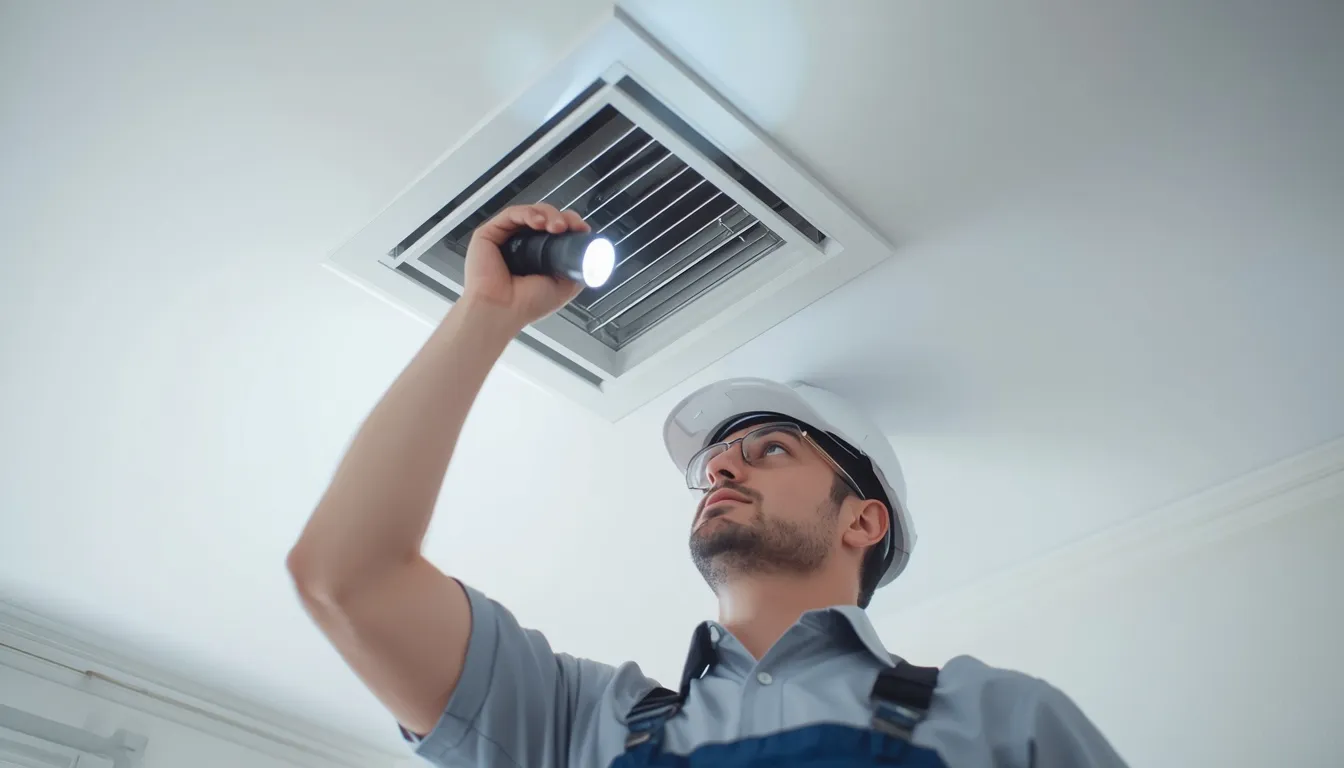
An AC running but not cooling can result from incorrect thermostat settings, a dirty filter, frozen coils, low refrigerant, or a failing component. Start with the thermostat, filter, and vents. If you find ice, smell burning, or notice repeated breaker trips, stop the system and arrange professional service.
Your air conditioner hums, air moves through the vents, and the thermostat looks normal. Yet the house keeps getting warmer. Before you lower the setting again, take a closer look at what the system actually does.
Some cooling problems start with simple things, like a blocked return vent. Others involve parts that need testing. The goal is to check what you can safely reach, recognize warning signs, and avoid guessing at repairs.
Why Does Your AC Sound Normal While Your House Stays Warm?
Your AC moves heat out of your home. The indoor blower pushes air across a cold coil. Refrigerant, the substance that carries heat, moves that heat to the outdoor unit.
A fan can run even when the cooling process stops. That means familiar sounds do not prove the compressor works or that refrigerant flows correctly.
Notice which problem you have. Strong but warm airflow suggests something different from barely any airflow. Cool air in most rooms, with one hot bedroom, may point toward a local airflow issue.
Also consider whether the problem started after a filter change, thermostat update, or recent service. Share that timing when booking. It does not prove that the change caused the fault, but it gives the technician a useful starting point. Avoid buying replacement parts based only on a sound or symptom.
These details help narrow the search. They also give a technician useful clues before the visit.
Check Your Thermostat Settings Before Looking for Bigger Problems
| What to Check | What to Do | Why It Matters |
|---|---|---|
| Cooling mode | Set the thermostat to Cool. | Fan mode alone moves air without cooling it. |
| Set temperature | Choose a temperature below the current room reading. | The thermostat needs to call for cooling. |
| Schedules and energy saving settings | Check whether a saved schedule changed your target temperature. | Automatic settings may keep your home warmer than you want. |
| Fan setting | Choose Auto for normal cooling operation. | On keeps the fan running between cooling cycles, when the air may feel warm. |
| Very low settings | Set your desired temperature instead of lowering it from 75 to 60 degrees. | A much lower setting will not make most systems cool faster. |
| Start delay | Allow the normal start delay after changing settings. Avoid switching modes repeatedly. | The equipment may pause briefly before restarting. |
| Blank display | Follow the thermostat instructions for checking batteries or power. | A blank screen may indicate dead batteries or a power issue. |
How Dirty Filters and Blocked Vents Reduce Cooling
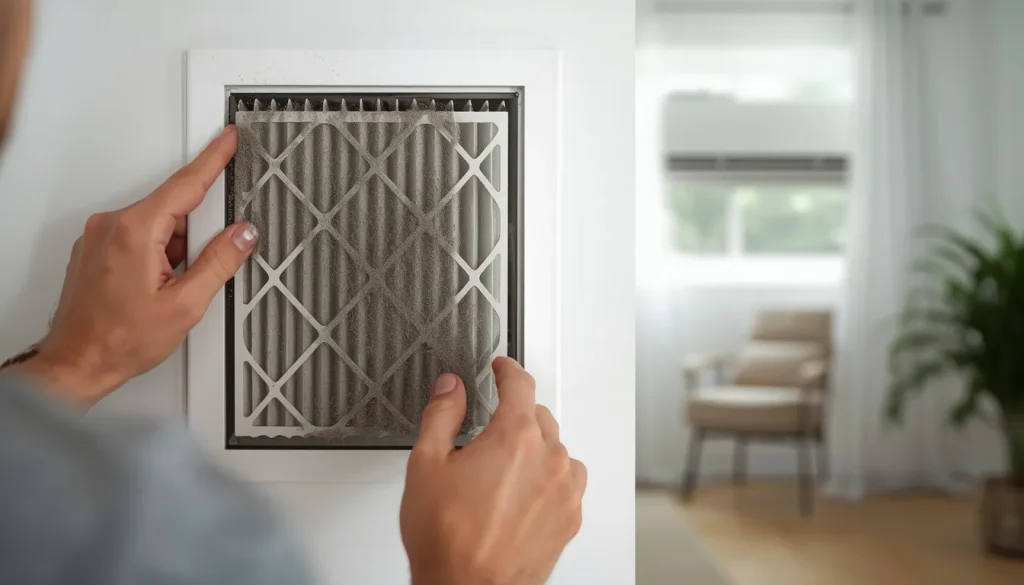
A clogged filter makes it harder for air to reach the indoor coil. You may notice weak airflow, longer cycles, or rooms that never feel comfortable.
Turn the system off before inspecting an accessible filter. Replace a dirty disposable filter with the size and type your equipment requires. Follow the airflow arrow and the manufacturer’s instructions. Do not run the AC without its filter.
Check filters regularly, especially when pets, dust, or heavy use increase buildup. Follow the recommended replacement schedule and change them sooner when needed.
Walk through each room. Move furniture, rugs, and curtains away from vents. Keep return grilles clear too. These larger grilles pull room air back into the system. Closing several supply vents can upset airflow instead of saving energy.
Why Dirty Condenser Coils and Frozen Evaporator Coils Affect Cooling
The outdoor condenser coil releases heat. Dirt and thick debris can limit that heat transfer. From a safe distance, look for leaves, grass clippings, or plants crowding the unit. Keep the surrounding space clear according to the equipment manual.
The indoor evaporator coil absorbs heat. Restricted airflow or refrigerant problems can make it freeze. Ice on an accessible refrigerant line is a warning sign, not proof that the AC cools well.
If you see ice, turn cooling off and contact a technician. Do not scrape the ice, use heat tools, or remove access panels. Thawing alone does not fix the cause. Carrier
Leave deep coil cleaning to a professional. Delicate fins bend easily, and electrical parts sit nearby.
Fan Running but No Cold Air? Refrigerant and Compressor Problems Explained
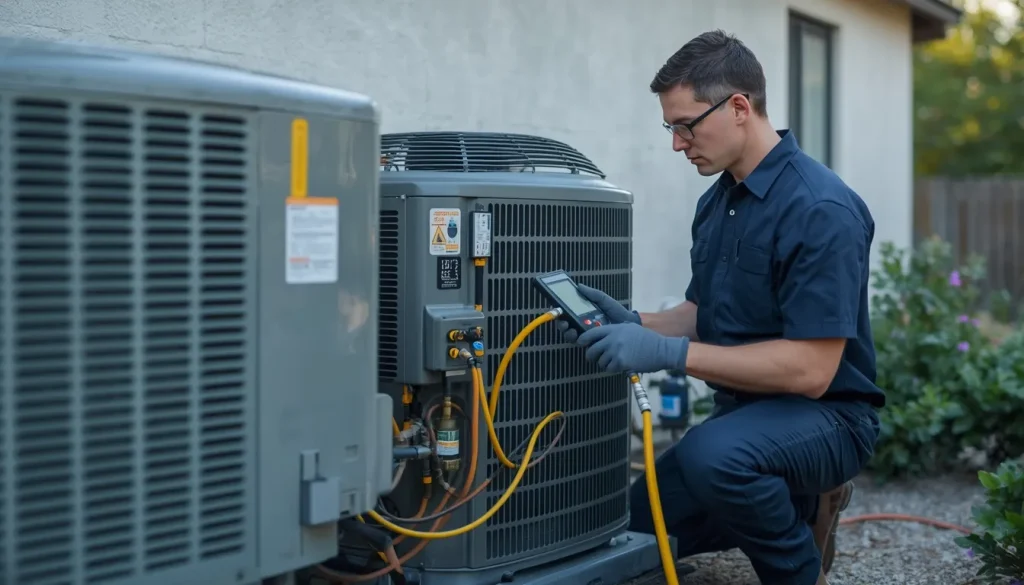
An air conditioner not cooling but fan running may have a problem beyond airflow. The outdoor fan and compressor do different jobs. Seeing the fan spin does not tell you whether the compressor runs.
The compressor moves refrigerant through the system. A failed electrical part can stop it from starting while a fan continues turning. A technician must test the parts before deciding what needs replacement.
Even if the AC compressor is running but not cooling the home, the system still needs checks. Low refrigerant, poor heat transfer, or compressor trouble may explain the symptoms.
Refrigerant does not normally run out with use. A low level can point to a leak or an incorrect charge. Ask about finding the cause rather than simply adding more.
Never open refrigerant lines or test electrical parts yourself. Some components can hold an electrical charge after power stops.
AC Runs All Day but Still Cannot Reach the Set Temperature
Long cycles do not always mean failure. On very hot days, an AC may run for long periods while keeping the indoor temperature steady. Some systems also run at lower speeds for longer stretches by design.
The concern grows when the house gets warmer despite constant operation. Leaking ducts may lose cooled air before it reaches rooms. Poor insulation, open doors, and strong sunlight can add heat faster than the system removes it.
If your AC isn’t cooling enough, compare today’s behavior with its usual performance. A sudden change deserves attention. A problem that returns every hot afternoon may require a closer look at heat gain and system capacity.
Close blinds on sunny windows and keep exterior doors shut. If only one room stays warm, report that detail. Do not assume you need a larger unit without a proper home cooling assessment.
What Can You Safely Check Before Calling for AC Repair?
Use this simple order for HVAC not cooling troubleshooting:
- Confirm Cool mode and a setting below room temperature.
- Check whether the fan setting explains airflow between cooling cycles.
- Turn the system off and inspect an accessible filter.
- Open supply vents and clear return grilles.
- Look for outdoor obstructions without reaching inside the unit.
- Check accessible areas for visible ice or water.
Do not climb into unsafe spaces or remove equipment covers. Leave electrical testing, refrigerant checks, and internal repairs to a qualified technician.
Stop the system if you smell burning, hear loud grinding, or notice repeated breaker trips. Do not keep resetting a breaker that trips.
Write down the room temperature, thermostat setting, and when the trouble began. Note whether air feels warm, weak, or uneven between rooms. These observations help explain the problem without guessing which part failed.
When Does an AC That Is Not Cooling Need Professional Help?
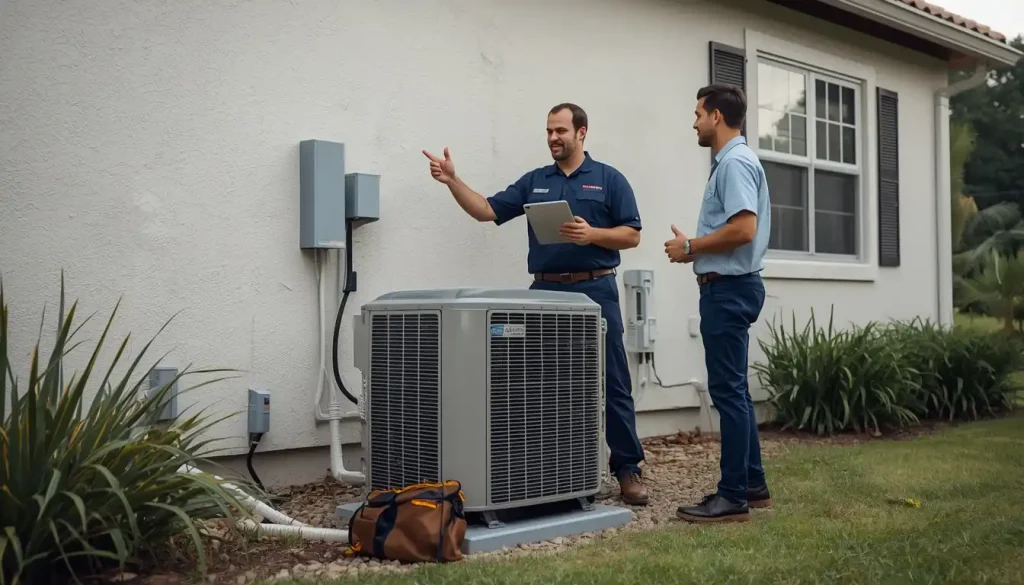
Arrange service when basic checks do not restore cooling, ice returns, or the outdoor unit does not operate during a cooling call. A sudden loss of cooling also deserves attention, even without unusual sounds.
Should you leave it running? If the system moves air but provides no cooling after basic checks, turn cooling off and seek help. Continuing to run faulty equipment may add strain without improving comfort. Carrier
Will a frozen coil fix itself? Melting ice may restore airflow briefly, but an unresolved airflow or refrigerant problem can cause freezing again.
During an inspection, a technician may measure airflow, compare air temperatures, test electrical parts, and check refrigerant conditions. Duct checks may help explain uneven cooling.
If indoor temperatures become uncomfortable while you wait, spend time in a cooler place. Use window coverings to reduce sunlight, and avoid adding heat with the oven. Portable fans may help you feel cooler, but they do not lower the room temperature by themselves.
Request a clear explanation of the findings and repair options. A sound recommendation should connect the fault to the symptoms. You can review available AC repair services before arranging an appointment.
How Regular AC Maintenance Helps Prevent Cooling Problems
Routine care helps your system move air and transfer heat properly. It also gives a technician a chance to spot wear before a small issue interrupts cooling.
Useful maintenance includes filter checks, coil inspection, drain checks, and testing key electrical parts. A technician can also check cooling performance and look for signs of refrigerant trouble. The exact work depends on the equipment and its condition.
Keep a simple record of filter changes, service dates, and any new noises or airflow changes. That history makes recurring problems easier to discuss.
Schedule AC maintenance based on the manufacturer’s guidance and your system’s use. Ask about the VIP Maintenance Plan if you want help organizing ongoing care.
Maintenance cannot prevent every breakdown. However, clean components and proper airflow support efficient operation and make developing problems easier to catch.
Get Help From The Air Squad in West Palm Beach, FL
A warm house does not automatically mean your air conditioner needs replacement. Start with the thermostat, filter, and vents. Then pay attention to warning signs and how the system responds.
If cooling still falls short, a professional inspection can help separate an airflow problem from a refrigerant, electrical, or equipment fault. Finding the cause gives you a clearer basis for choosing the next step.
The Air Squad offers maintenance and repair services for cooling problems. Share what you checked, when the issue started, and which rooms feel warm so the team understands your concerns.
Contact the team to request service and get help restoring comfortable airflow and cooling in your home.